No operations leader wants to get that urgent call during a shift: “There’s been an incident on the floor”.
When an injury occurs, the speed, composure, and clarity of your onsite accident response determine much more than compliance. Your immediate actions shape workforce trust, impact operational downtime, and protect your company’s reputation.
Whether you oversee a manufacturing plant, a logistics facility, or a multi-shift service environment, having a standardized response framework is essential.
Here is a practical, 3-step playbook designed for shift leads and operations managers.
1. Prevent: Building an Active Accident Prevention Strategy
The best incident response is the one you never have to execute. However, standard safety protocols often fail for one simple reason: workers tune them out.
To turn passive compliance into an active accident prevention strategy, operations leaders should implement these daily habits:
- Ditch the passive safety speech: Most workers zone out during repetitive daily huddles. Instead of reading policy bullet points, drive active engagement by asking scenario-based questions (“If this conveyer line jams right now, who controls the lockout procedure?”).
- Rotate safety leadership: Assign different team members to lead the daily 2-minute safety check. People pay closer attention when they are responsible for teaching their peers.
- Establish friction-free escalation: Workers must know exactly who to notify about a broken tool, oil leak, or near-miss without fear of shift delays or management pushback.

2. Respond: The Critical First 15 Minutes
When an incident occurs despite preventive measures, the first 15 minutes of your onsite accident response set the tone for safety and compliance.
Immediate Action Checklist
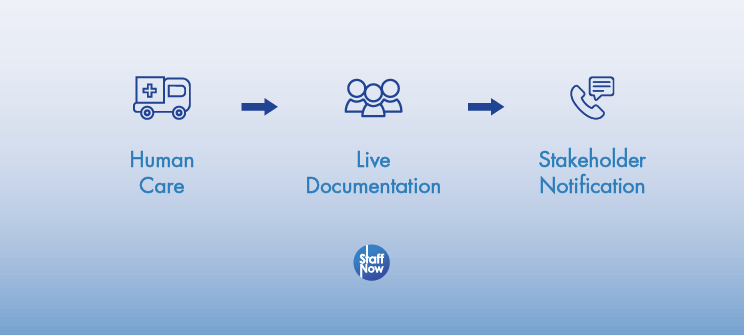
- Prioritize human care above all: Immediately halt machinery in the affected area, secure the perimeter, and assign a dedicated team member to remain with the injured person until medical professionals arrive.
- Document details live: While memory is fresh, capture exact timestamps, take photographs of the immediate surroundings, and note initial statements from witnesses.
- Notify key stakeholders within the hour: Alert internal EHS (Environmental Health and Safety) leads, leadership, and external staffing partners straight away. Following standard official OSHA reporting guidelines ensures full compliance and prevents administrative friction later.
3. Resolve: Debriefing Processes, Not People
Once the scene is clear and medical care is arranged, the focus shifts to long-term resolution and system improvement.
Moving From Blame to Root-Cause Analysis
- Focus on process failures: Avoid pointing fingers at individual workers. Ask why the unsafe condition existed and what process gap allowed it to happen.
- Update procedures across all shifts: If the incident revealed an oversight in training or equipment maintenance, update the standard operating procedure (SOP) immediately and brief all shift leads before the next cycle.
- Close the loop with the workforce: Share the corrective actions taken with your team. Demonstrating that feedback leads to real physical safety improvements builds lasting trust.
Is Your Team Truly Prepared?
Taking care of people during critical moments is the true test of operational leadership. Relying on passive manuals isn’t enough—your shift leads need a clear, actionable routine they can execute under pressure.
How does your leadership team approach workplace safety? Evaluating your current protocols today can prevent your next shift disruption tomorrow.